
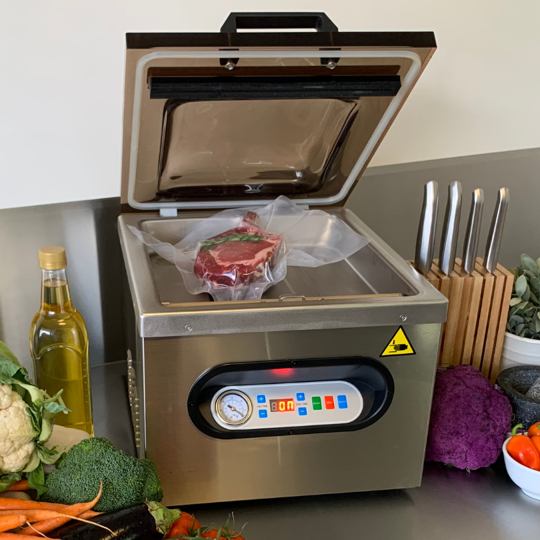
Buying the wrong vacuum sealer can be a costly mistake. From wasted food to ruined bags, not to mention underperforming machines that never get used, it’s a purchase you want to get right the first time. With so many models to choose from, each with different standout features, it can be difficult to choose the right machine for your kitchen. Understanding what to look for when buying a vacuum sealer can help guide your choice far more than price, because it all depends on how you plan to use it.
Here, you’ll learn exactly what features make a difference, from how much suction power you really need to keep your food fresh for longer, to which types of vacuum sealers are best for moist foods. We’ll also highlight the must-have features as well as those that don’t meaningfully improve performance, despite the marketing claims. Armed with this information, you’ll be able to confidently choose a vacuum sealer that matches your food-saving goals, without paying for features that you’ll never use.
Before Evaluating Features: Know Your Vacuum Sealer Types
External/Suction Vacuum Sealers
External vacuum sealers are the most common type of vacuum sealer for home use because they are affordable, compact and simple to use. Ranging in price from $100-$400, they work by extracting air from the bag and then heat-sealing the bag shut.
Chamber Vacuum Sealers
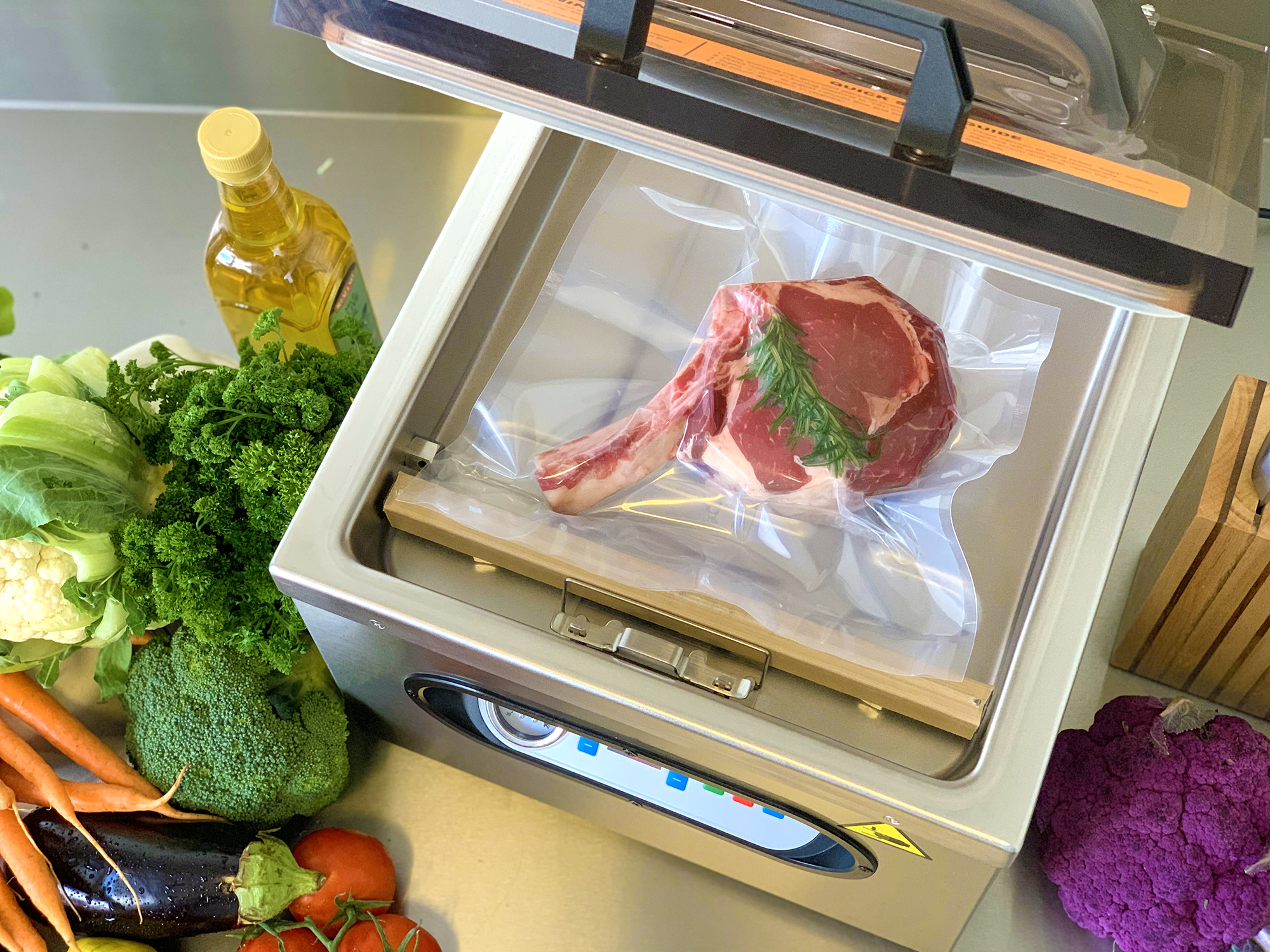
Chamber vacuum sealers work a little differently. Rather than removing air from the vacuum sealer bag itself, the bag is placed into a chamber and air is removed from the entire chamber. This makes them ideal for vacuum sealing liquids. Because they are bulkier and give a stronger, more consistent seal, they are more commonly used for bulk processing in commercial settings. They are also more expensive, ranging in price from $1200-$5000.
Critical Performance Features
1 – Suction Power & Vacuum Pressure (The Most Important Metric)
Why Suction Power Matters
How much air the machine can remove is the most critical factor when choosing a vacuum sealer because it’s this lack of air inside the bag that extends the shelf life of foods. Strong suction also means air is removed faster, so delicate foods are less likely to be over-vacuumed and therefore, not crushed. Powerful suction also helps the bag remain flat and tight, which leads to a better heat seal.
What to Look For
Suction strength is measured in inches of mercury (inHg) or kilopascals (kPa). The stronger the suction, the better your food will be preserved. However, balancing the need for strong suction with price is key, so be realistic about what you need for home use. Home models typically range from 22-28 inHg, but choosing a vacuum sealer with around 24inHg will provide sufficient power to ensure your food stays fresher for longer without having to pay commercial prices.
2 – Seal Width & Seal Quality
Even if you have strong suction, fresh food won’t stay that way without a sturdy seal. Standard seal widths range from 2.5-5mm, but you should always opt for a wider seal where possible. Narrow seals are more likely to fail when food shifts or is frozen, and offer a weaker hold in the presence of moisture.
3 – Seal Length/Bar Length
You can’t vacuum-seal bags that are bigger than the sealing bar. For maximum versatility, choose larger bar sizes of 320mm, rather than the smaller 280mm. That way, you’ll be able to vacuum-seal foods more efficiently with a sealer that can handle decent portion sizes.
Essential Convenience Features
4 – Bag Compatibility & Versatility

After your initial vacuum sealer investment, you’ll still have the ongoing costs of vacuum seal bags to consider. External vacuum sealers need embossed bags so that air can escape properly. These are more expensive than micro channel/embossed micro channel bags, but your vacuum sealer won’t work properly with the wrong sort of bags. Choose a vacuum sealer that works with universal bags for greater versatility and to decrease your ongoing costs.
5 – Built-in Bag Cutter & Roll Storage
Vacuum sealers with features like bag roll storage space make for a more efficient sealing process. It’s much easier to vacuum seal multiple bags when everything you need is within easy reach. The convenience of built-in bag cutters shouldn’t be underestimated either, because these can help you save money and reduce waste with custom-sized bags.
6 – Pulse Function & Manual Mode
A vacuum sealer’s pulse function lets you remove air in short bursts so that you don’t pull liquids into the machine or crush soft foods. Manual mode lets you stop suction at the ideal time and seal instantly. Together, these functions make sealing soft and moist foods cleaner and more precise.
Specialised Functions
7 – Wet & Dry Food Capability
If you plan to use your vacuum sealer to preserve cooked meals, marinated meats or soups, it needs to be capable of handling liquids, which most external vacuum sealer machines aren’t. External sealers suck air, and therefore liquids, out of the bag. However, if you want a less expensive and more compact model than a chamber vacuum sealer, look for suction models with features like adjustable suction or liquid-block mode.
8 – Accessory Port & Container Sealing
For maximum versatility, look for a vacuum sealer with an accessory port so that you can seal more than just bags. You simply attach a tube so that you can vacuum-seal jars, wine stoppers or canisters, allowing you to store a wider variety of food in durable, reusable containers.
9 – Automatic Bag Detection
If you’re looking for a time-saving feature that will help you be more efficient when batch packing, auto bag detection is worth paying more for. It allows the vacuum sealer to detect when a bag has been placed in the tray and automatically start the sealing process without manual input.
Build Quality & Durability
10 – Motor Power & Duty Cycle
When it comes to vacuum sealers, higher power means better suction and performance, while the duty cycle determines how long it can run for before overheating. For occasional use at home, moderate power levels of around 100-150W and shorter duty cycles will be suitable. However, if you’re frequently sealing in big batches, you might need to look for a continuous duty cycle and a stronger motor to avoid frequent stoppages.
11 – Construction Materials & Housing
The durability and longevity of your vacuum sealing machine largely depend on what it’s made of. Those with stainless steel bodies will last longer because they won’t rust or dent easily and are more suitable for heavy use than those with plastic housing. High-quality materials also mean better heat management, which creates a stronger seal. A solid housing can also help to reduce noise and vibration during operation.
Bonus Features Worth Considering
Here are a few other things to consider when buying a vacuum sealer that can make life easier.
Control Panel & Indicators
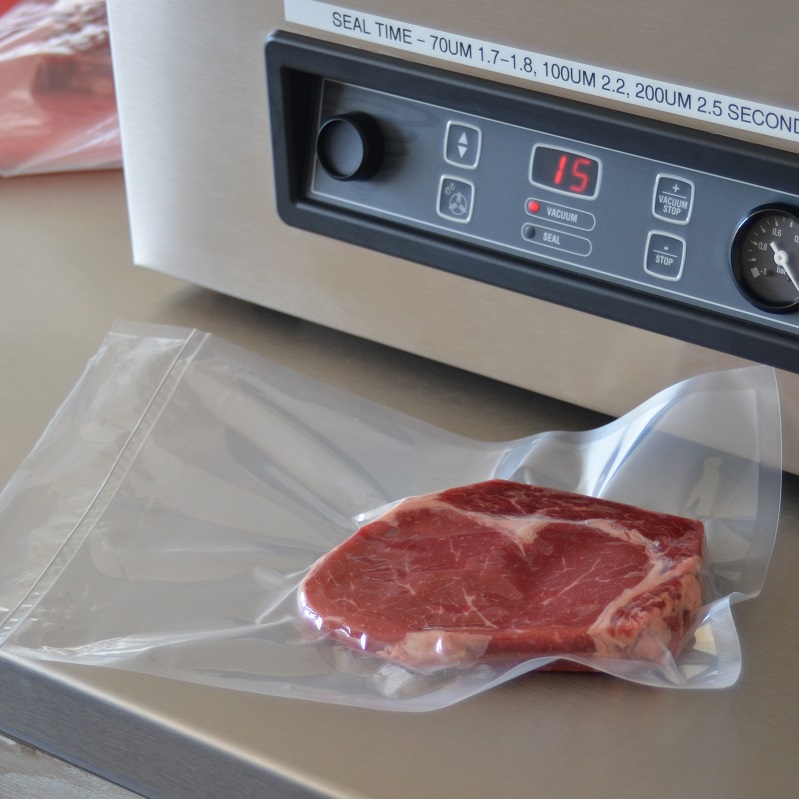
Look for a logical button layout for easy use, as well as LED indicators that signal the mode of operation and reduce the likelihood of mistakes. Preset modes like sous vide can also be helpful, but remember – the more buttons and modes, the more you’ll be pulling out your user manual.
Size & Storage
You’ll get more use from your vacuum sealer if it’s conveniently located on your bench rather than being a heavy, bulky machine hidden away in a cupboard somewhere. Keep in mind, too, that some sealers can be stored on their sides, while others feature built-in cord clips or compartments.
What Not to Overpay For
While you want your vacuum sealer to be functional, don’t fall for gimmicks that don’t add much value. This includes an excessive amount of preset modes, fancy aesthetics that don’t improve functionality, duplicate features, and Wi-Fi connectivity.
Matching Features to Your Needs
For Occasional Users
Our top recommended features to look for in a vacuum sealer for occasional users are suction power, wide seal width and bag compatibility.
For Regular Meal Preppers
Our recommended feature set for meal preppers includes suction power, longer bar length and pulse function.
For Bulk Food Processors
For those who aren’t ready to invest in commercial-grade vacuum sealers but who use theirs frequently or for big batches, look for good suction power, wide seal width, built-in bag cutter bars and a continuous duty cycle.
Comparison Table
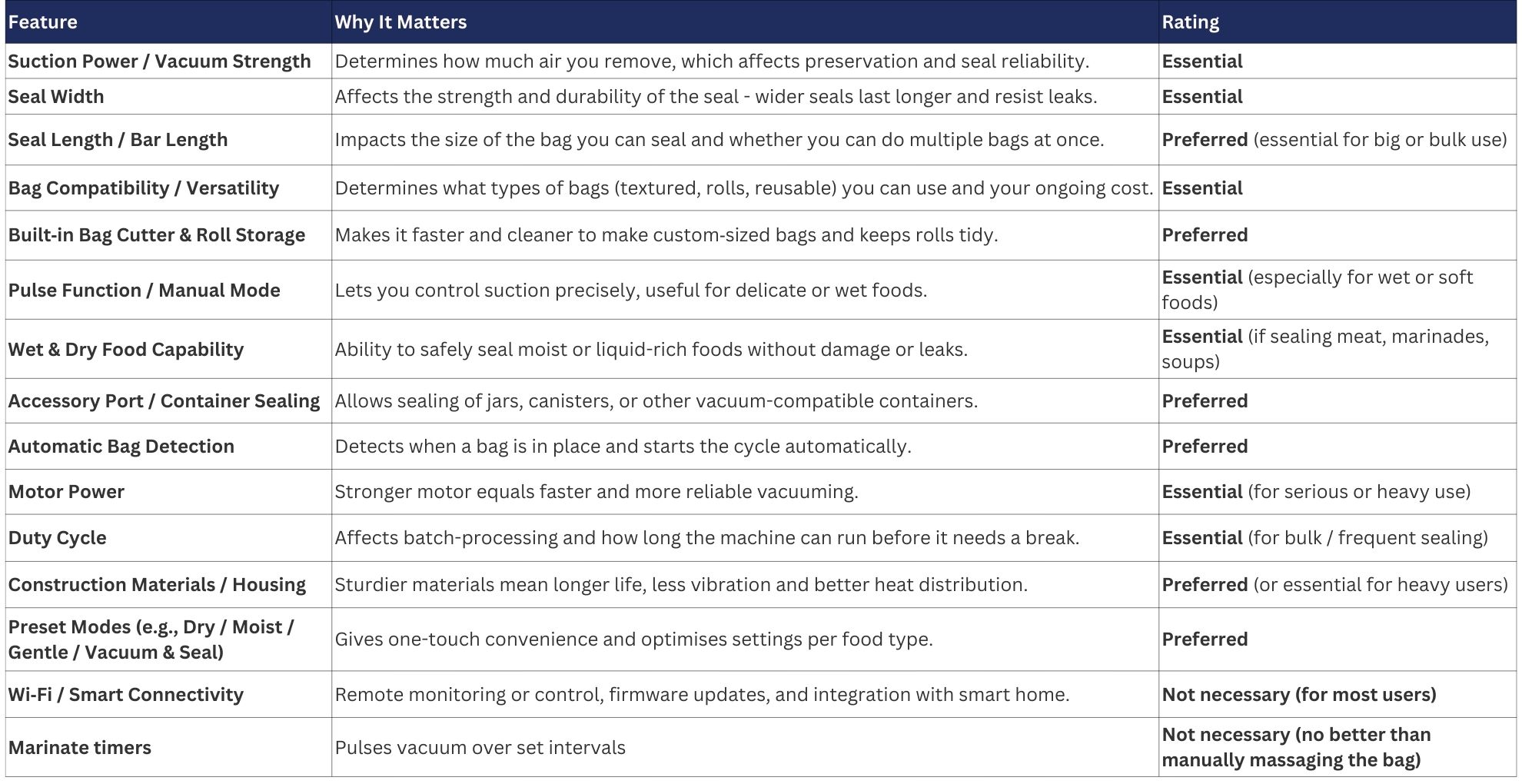
Here’s a quick-look guide of the essential features of a reliable and versatile vacuum sealer, those features that are nice to have if you can afford them, and which ones don’t give you much bang for your buck.
A Vacuum Sealer for Every Home
Choosing the right vacuum sealer for your needs goes beyond what it looks like or how much it costs. Cheaper models can be packed with enough features to satisfy the needs of home cooks who bulk buy or fishermen who want to preserve their catch, so you don’t always need to buy the flashiest or most expensive models on the market. However, if you’re using your machine frequently or for long periods, you may benefit more from a vacuum sealer with extra time-saving and convenient features.
At Pac Food, our vacuum sealers are tried and tested for reliable performance every time. Whether you’re looking to save on your grocery bill by keeping food fresher for longer, you’re a time-poor meal prep master, or you regularly process game meat, our range doesn’t have frivolous features you’ll never use. Just high-quality vacuum sealers equipped with handy extras that will make your life easier.
Visit our website today to see the full range and find a vacuum sealer that fits your budget and requirements.
Frequently Asked Questions About Vacuum Sealer Features
What’s the minimum suction power I need for a home vacuum sealer?
Home users should look for a vacuum sealer with around 24inHg of suction.
Can I use any bags with my vacuum sealer?
The type of bag you need depends on your machine model. However, you can buy embossed sealer bags and rolls from Pac Food that are compatible with all brands of vacuum sealers on the market.
Are chamber vacuum sealers worth the extra cost?
Chamber models are generally suited to commercial settings because they are designed for high-frequency use and are also much bulkier. If you’re a home user who’s looking to save money and save space, you can probably find an external vacuum sealing machine with enough features to suit your requirements.
Do I need a vacuum sealer with a built-in cutter?
You don’t need a vacuum sealer with a built-in cutter, but they can make the vacuum sealing process a lot more efficient. They can also help cut costs by reducing bag waste, because they allow you to create straight, custom-sized bags in seconds.
What does “duty cycle” mean for vacuum sealers?
The duty cycle is how long a vacuum sealer can run for before it needs to cool down. If your vacuum sealer has a low duty cycle, normally around 60 seconds, it will need to keep shutting off to cool down between seals. However, some vacuum sealers can support continuous operation, which is a lot more convenient if you’re sealing large batches of food.