
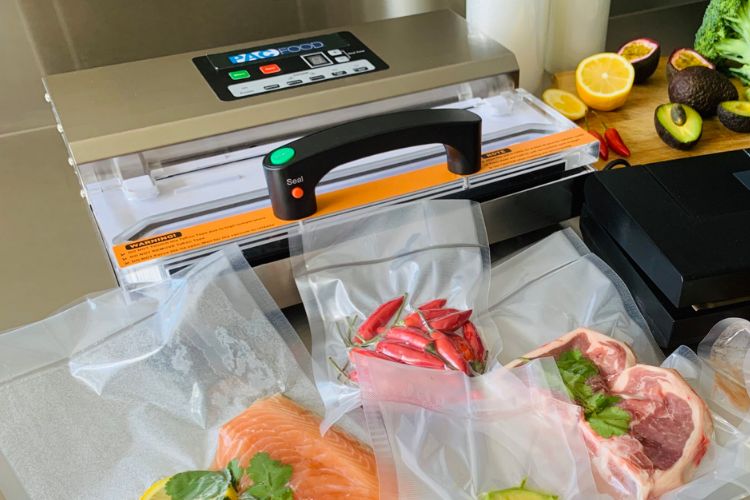
A vacuum sealer is one of the most practical appliances you can have in an Australian kitchen. It extends the shelf life of your food, reduces waste, and makes bulk buying and meal prep far more efficient. Setting up your vacuum sealer for the first time only takes a few minutes, and your first seal not much longer than that.
From unboxing to your first sealed bag, we’ll cover setup, your first vacuum seal, and the mistakes most beginners wish they’d known about sooner.
Before you seal anything, you need to set up your food vacuum sealer. Our domestic range at Pac Food uses external vacuum sealers (also called out-of-chamber sealers), which are the most common type in Australian homes. The setup is straightforward and only takes a few minutes.
| Step | What to Do |
| 1. Find your spot | Flat, stable benchtop near a power outlet |
| 2. Plug in and power on | Check that the machine powers up and familiarise yourself with the controls |
| 3. Load your roll | Place the roll in the storage compartment and use the cutter to size your bag |
| 4. Make your first bag | Seal one end of the cut piece using “seal only” to create a bag |
| 5. Learn your settings | Understand dry, moist, pulse and seal-only modes (availability varies by model) |
You want a flat, stable surface with enough room for the bag to lie flat in front of the machine. A chopping board placed in front of the sealer gives the bag something to rest on and stops food from sliding around during the vacuum process.
Make sure your vacuum sealer powers up and spend a minute looking over the control panel. Most countertop vacuum sealers have clearly labelled buttons. You don’t need to memorise everything right now, just know where the main vacuum/seal button is.
If your machine has a roll holder or cutter attachment (available as an add-on for the Pac Food VS603), slot the roll in and pull out enough material for your bag. Use the cutter to trim it to size. If you do not have a roll holder, just unroll the material on your benchtop and cut with scissors.
Cut your roll to length, then seal one end using the “seal only” function. That closed end turns your flat piece of roll into an actual bag, ready to fill.
Most foods seal on the dry setting. If you’re working with something that has surface moisture, like fresh meat, switch to moist mode (if available on your model).
When you unbox your vacuum sealer, you’ll typically find the machine itself, a power cord, and a few sample bags. Depending on the model, you might also get a few extras. The Pac Food VS603, for instance, comes with spare Teflon tape and a replacement heating element, and offers features like marinate and pulse control. The VS105 is a more compact, budget-friendly option that covers the essentials for everyday home use, including pulse vacuum and a seal-only function.
Whichever model you go with, the two parts you’ll use most are the seal bar and the vacuum channel. The seal bar is the heated strip that fuses your bag shut, and the vacuum channel is the recessed area where air gets pulled from the bag. It’s worth knowing the difference early on, because your bag needs to sit across the seal bar, not inside the vacuum channel, when you position it for sealing.
Now for the best part, it is time to seal something. Start with a dry item, such as cheese, nuts, or portioned meat, that you’ve patted dry. Dry foods are forgiving and give you a clean, easy first experience.
Make sure it’s clean, dry, and portioned so it fits comfortably in your bag. If you’re sealing meat from the butcher, pat it down with a paper towel to remove surface moisture.
Place your food inside the bag, leaving 7-10 cm of space at the open end. Fold the top of the bag outward like a cuff as you fill it. This keeps the seal area clean and free of food debris, which is critical for creating an airtight seal.
Open the lid of your vacuum sealer, place the open end of the bag flat across the seal bar, and make sure it’s centred and smooth. You want to ensure there are no wrinkles or bunching.
Lock the lid in place and press the vacuum and seal button. The machine will remove all the air from the bag and then automatically heat-seal the open end shut. You’ll hear the motor change tone when it switches from vacuuming to sealing.
Run your finger along the sealed edge. It should feel firm and even with no gaps or wrinkles. If something looks off, cut above the seal line and try again.
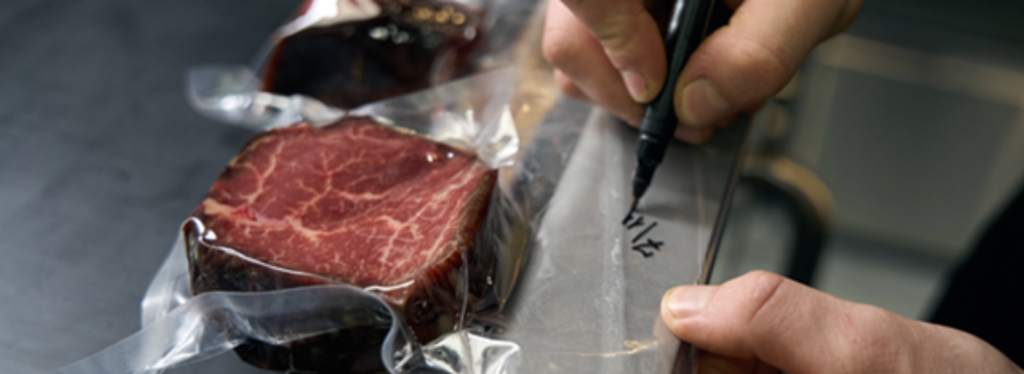
Grab a permanent marker and write the contents and date on the bag before it goes in the freezer or fridge. Vacuum-sealed food all looks the same once it’s frozen, and in the future, you probably won’t remember whether that’s chicken or pork.
That’s it, you’ve just completed your first vacuum seal!
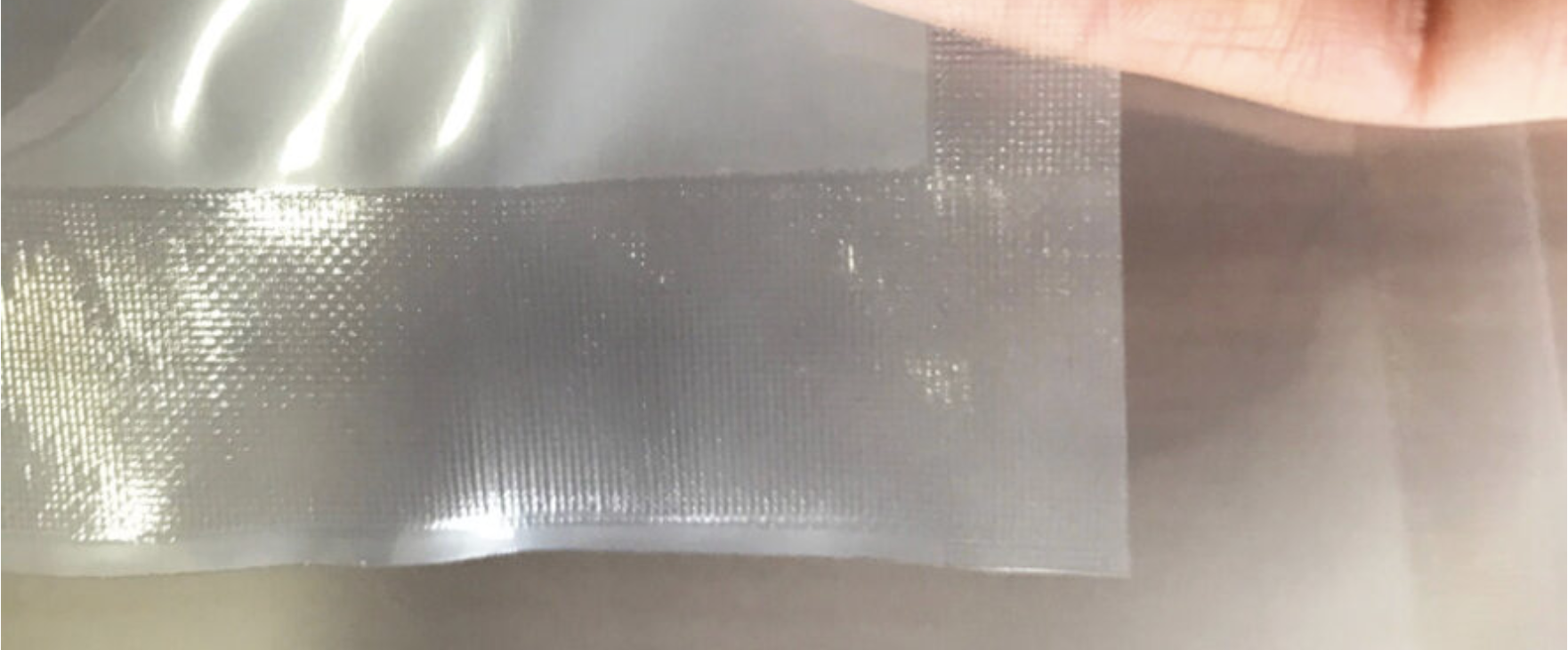
External vacuum sealers only work with microchannel or embossed microchannel bags. The textured channels on the surface allow air to escape during the vacuum process; without them, you cannot vacuum-seal.
You can buy these as pre-cut bags, ready to go straight out of the packet, or as rolls that let you cut to custom sizes so you’re not wasting material on smaller items. Either way, match the bag width to what you’re sealing and leave enough headroom above the food for a clean seal.
For bony cuts like chops or T-bones, embossed micro channel bags are the better option. The heavier texture handles sharp edges and reduces the chance of a puncture ruining your seal.
Now that you know how to use a vacuum sealer, here are five easy ways to build your confidence and start saving food from the bin. Vacuum sealing can extend the shelf life of food by up to five times compared to traditional storage, so even these simple projects make a real difference.
| Food | Why It’s a Great Starter | Quick Tip |
| Hard cheese | Dry surface seals easily; stays fresh in the fridge for weeks longer | Use pulse mode for soft cheeses to avoid crushing them |
| Portioned meat | Buy bulk from the butcher, portion, seal and freeze. Saves money and protects food from freezer burn | Pat dry before sealing for a stronger seal |
| Nuts and pantry staples | Prevents staleness, keeps out dust and pantry moths | Dry items seal flawlessly, making them a perfect confidence-builder |
| Fresh herbs | Seal small portions for weeknight cooking; no more wilted bundles in the crisper | Lay flat in a single layer for even freezer storage |
| Leftovers and meal prep | Grab-and-go portions that stay fresh and reduce food waste | Always let food cool completely before sealing to avoid bacterial growth and weak seals |
Vacuum sealing can also speed up the marinating process. The vacuum pressure helps meat absorb flavours in around 30 minutes, rather than hours. Plenty of Australians also vacuum-seal fishing gear, camping supplies, and important documents to keep them dry and protected.
Not every model has all of these settings. The VS603 offers the full range below, while the VS105 includes pulse vacuum and seal only.
| Setting | What It Does | When to Use It |
| Dry | Default vacuum and seal cycle | Cheese, bread, nuts, flour, snacks, frozen items. Anything without surface moisture |
| Moist | Adjusts suction to stop liquids from being pulled into the seal area | Fresh meat, marinated items, poultry, fish |
| Pulse / Manual | Lets you control how much air is removed | Delicate items like bread, berries, or soft cheeses that would crush under full vacuum |
| Seal Only | Seals the bag without vacuuming | Making bags from rolls, or re-sealing a bag you’ve partially used |
| Marinate | Cycles vacuum pressure to push marinades into meat faster | When you want flavour in 30 minutes instead of overnight |
Your vacuum sealer doesn’t need much maintenance, but a little goes a long way. Wipe down the seal bar and vacuum channel after each use, because food residue is the quickest way to degrade your seal quality. The foam gaskets and seals also wear out gradually, so give them a check once a year.
Between uses, keep the machine clean and store it somewhere cool and dry, rather than a humid garage. The VS603 comes with spare Teflon tape and heating elements, and Pac Food stocks replacement parts if you need them down the track.
Check that the bag is positioned on the seal bar, not in the vacuum channel, and make sure the lid is locked properly.
Clean the seal bar area and check for moisture or food debris at the seal point. Reposition the bag flat and try again. Wrinkles in the bag are a common culprit.
The bag may have a puncture from sharp bones or from the edges of food. Try a fresh bag and use protective padding (like a folded paper towel) over bony cuts before sealing.
Switch to moist mode if your model has it. For sealing liquids or very wet foods, freeze them first, then vacuum seal once solid. Pre-freezing is the most reliable method for vacuum sealing liquids such as soups or sauces. You can also use the pulse function to stop suction before liquid reaches the seal area.
You’ve set up your machine, nailed your first seal, and you know which bags to use and which mistakes to avoid. That’s all there is to it.
From here, it’s about building the habit. Bulk buying from the butcher, meal prepping on Sunday, sous vide cooking on a weeknight, saving food that would otherwise end up in the bin.
Australians waste around $2,500 worth of food per household each year, and a vacuum sealer is one of the simplest ways to reduce that waste.
Ready to get started? Explore Pac Food’s range of domestic vacuum sealers and compatible bags to find the right fit for your kitchen.