
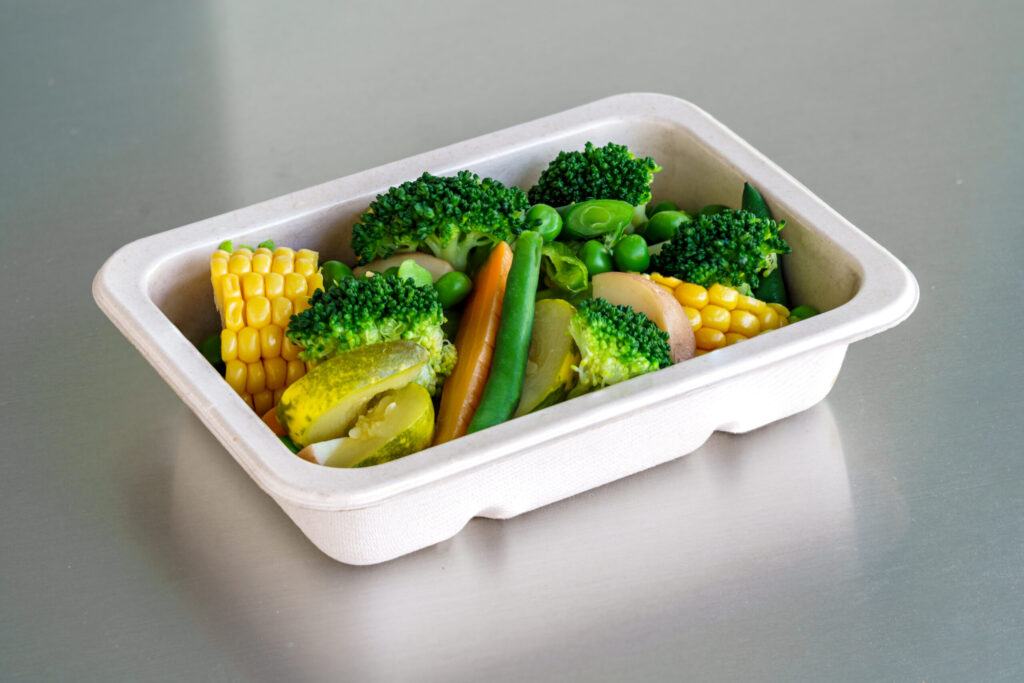
Thinking about what meal tray to use for your business?
There are so many decisions to make about the type of packaging you’ll need for your service, so we’ve put together this guide to the top ready meal tray options for food businesses to save you hours of research finding the right tray for your needs. Not every ready meal tray does the same job. A meal tray that’s fine for a chilled pasta meal heated in a microwave might crack the first time it goes from a deep freeze into a hot oven. A tray built for supermarket presentation might slow a fast line cooking meals at volume for meal delivery services. The right meal tray depends on your meals, how they’re cooked, your sealing equipment, and how customers receive and heat the meal.
Lined sugarcane trays may suit businesses seeking high-performance fibre-based packaging and reduced plastic use. CPET trays are often the starting point for demanding freezer-to-oven meals and premium presentation. PP trays, aluminium and simpler fibre trays suit narrower applications. This guide covers the practical differences so you can compare options before requesting samples or running a trial.
| Tray option | Best suited to | Heating | Main strength | Main limitation |
| Cpet Lined sugarcane | Fibre-based ready meal trays | Freezer, microwave and oven up to 200° | Fibre-based appearance and strong sealing properties. | Disposal instructions vary by lining |
| CPET /EVOH | Frozen and premium heat-and-eat meals, MAP | Freezer, microwave and conventional oven, 180° | Wide temperature range and barrier performance, long shelf life. | Higher plastic content |
| PP/ EVOH | Chilled or microwave-only meals, MAP and Skin Seal | Freezer/microwave, generally not conventional oven | Lower cost and lightweight. Long shelf life. Meet Apco recyclability criteria. | Narrower heat range |
| Aluminium | Oven-ready meals and catering | Conventional oven | Heat tolerance and rigidity, fully recyclable | Not suitable for normal microwave use and not eco-friendly |
| Basic fibre trays | Immediate takeaway or short-use applications | Product-specific | Fibre-based appearance | May not suit long storage or demanding seals |
Verify each product’s specific temperature, sealing and food-contact instructions before you commit.
Follow each meal from fill temperature through chilled or frozen storage, transport, and reheating. If a meal goes from a deep freeze into a hot oven or convection oven, confirm the tray is rated for that transition, and check the maximum heating temperature and duration. Microwave-safe doesn’t automatically mean oven-safe. FSANZ advises businesses to use packaging that is fit for its intended purpose and can withstand conditions such as freezing, microwaving and heating.
Curries, gravies, oily meals and acidic sauces test a tray harder than dry foods. Check for moisture and condensation, whether a barrier lining is needed, and the risk of leaks during transport. Test your hardest recipes, not just the easiest meal in the range.
Shelf life can be affected by food formulation, fill temperature, chilling speed, oxygen barrier, seal quality, storage temperature, distribution conditions, and processes such as MAP (modified atmosphere packaging), skin sealing or pasteurisation. The tray is only one part of that picture, so validate any supplier shelf-life claim against your own food and process.
Before choosing a tray, check that it suits the sealing equipment you already use. The tray size and rim must fit the sealing die, and the film needs to be the correct width for the machine. You will also need to confirm the appropriate sealing temperature and seal time. Depending on the product, features such as high-barrier protection, easy-peel opening or anti-fog film may also be important. For automated production lines, test that the tray runs smoothly through the full process, rather than relying on a single seal test.
Consider black versus natural fibre presentation, retail shelf visibility, compartment trays, portion sizes, stacking, vertical display, and how easily a customer can open the pack. This matters for bakery products and desserts as much as for mains.
Made from renewable materials, designed for recyclability, accepted through kerbside recycling, commercially compostable to AS 4736 and home compostable to AS 5810 are not interchangeable claims. A tray may meet one of these criteria without meeting the others. For example, packaging can be designed for recycling but still not be accepted by every council or processing facility.
Check whether the claim applies to the complete tray, including any lining, coating or other components, and whether suitable collection and processing services are available where the packaging will be used. Environmental claims should be clear, specific and supported by evidence. The ACCC also warns businesses against exaggerating environmental benefits or leaving out qualifications that could affect how customers understand a claim.
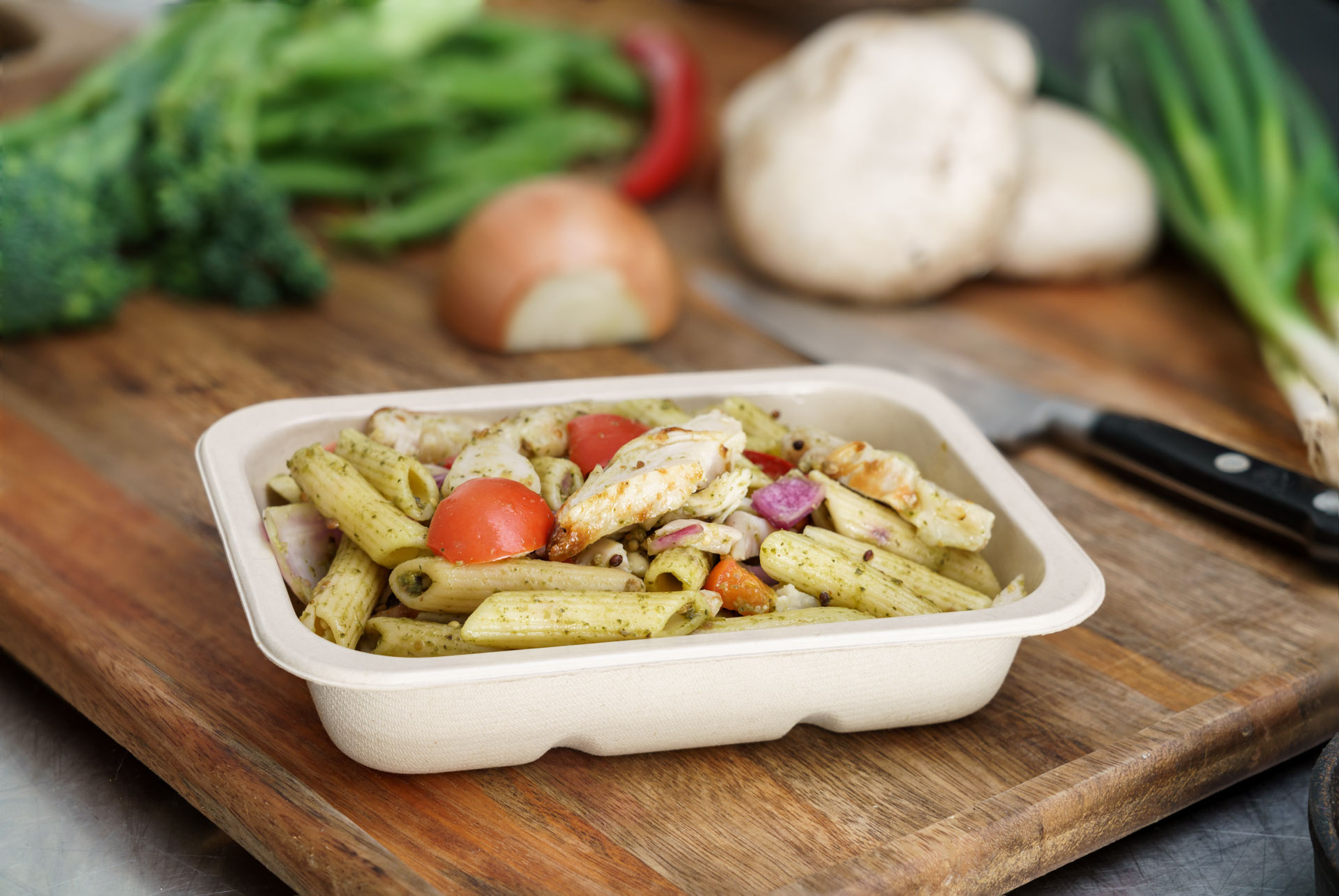
The tray body is primarily made from sugarcane pulp, or bagasse, an agricultural waste product. A lining protects the fibre from moisture and creates a suitable surface for sealing. Pac Food’s lined sugarcane range contains a minimum of 90% sugarcane pulp, accommodates multiple lidding-film formats including vacuum skin packaging for a premium display-ready look, and has a temperature range of -40°C to 200°C.
Lined sugarcane trays are well suited to chilled and frozen meals where both presentation and moisture resistance matter. They can work particularly well for meal delivery services, hospital and aged care kitchens, airline catering and central production kitchens. They are also worth considering for skin-sealed retail meals or saucy dishes that need a protected fibre base.
The fibre body gives the pack a natural look while still supporting demanding food applications. Depending on the lining and tray format, it may be suitable for freezing, microwave reheating and oven use. The lining helps the tray hold its shape around wet or oily foods and allows it to work with different sealing films, including skin packaging.
End-of-life options differ across the range. Some trays are recyclable, some have a removable lining, and others are designed to be fully compostable. For suitable orders, lined sugarcane may also offer a cost advantage over CPET.
Check the exact lining before relying on any heating, recycling or composting claim. A tray described as compostable will not necessarily be accepted by every FOGO service, and disposal guidance should be based on the specific product.
Trial the tray with your actual meal and lidding film, then put it through the full storage and reheating process. Custom sizes may also carry minimum order quantities. Pac Food reports that its PP/EVOH-lined sugarcane trays meet APCO recyclability criteria with the lining attached, although this applies to that particular tray construction rather than fibre trays generally.
CPET is crystallised polyethylene terephthalate, a variation of standard PET processed for greater heat resistance, rigidity and toughness than standard PET. Pac Food’s CPET range is promoted for fresh, frozen and skin-sealed meals, with a stated temperature range of -40°C to +220°C.
Frozen retail meals, freezer-to-oven products, meals reheated in either an oven or microwave, premium prepared meals, multi-site meal distribution, central production kitchens, supermarket and convenience meals, airline catering, and healthcare and aged care foodservice.
A broad temperature range, oven and microwave flexibility, an attractive and consistent appearance, good rigidity, strong sealing performance, leak-resistant seals, a range of sizes and shapes, and high-barrier and skin-sealing compatibility suited to large-scale distribution.
Check how each part of the pack should be handled after use, including the tray, film and label. Local recycling options can vary, while labels, film and food residue may affect whether the packaging can be recycled.
High-barrier film can help protect the meal, but it does not guarantee a particular shelf life. Test the finished pack using your actual food, production process and storage conditions. Manufacturers are responsible for determining and substantiating their products’ shelf life.
For MAP packaging, confirm that the tray, film and equipment are suitable for the process, and that the tray dimensions match your sealer and tooling.
PP suits chilled and microwave-reheated meals, particularly lower-temperature applications. It offers potentially lower material costs and a lightweight construction, though it is generally not the first choice for conventional oven heating, and freezer performance is product-specific.
Aluminium handles conventional oven meals and catering and bakery use well, offering good rigidity, heat tolerance and full recyclability. They have limitations for normal microwave reheating and need a separate lid or film system.
These suit immediate foodservice and takeaway, with natural fibre presentation for short-duration use. They may have limitations with extended chilled storage, freezing, sealing and very wet meals, so it’s worth distinguishing ordinary takeaway trays from engineered lined ready meal trays. A lower-specification tray may be entirely appropriate when the meal doesn’t require prolonged storage, freezing, sealing or consumer reheating.
| Business or application | Likely starting point | Why | Questions to confirm |
| Frozen meal delivery | CPET or suitable lined sugarcane | Freezing and reheating flexibility | Oven or microwave, transport duration, seal type |
| Sustainability-led meal brand | Lined sugarcane | Renewable fibre and recovery options | Exact lining, local disposal pathway, heating process |
| Hospital or aged care kitchen | CPET or lined sugarcane | Portioning, distribution and reheating | Handling, labelling, meal identification, heating equipment |
| Central production kitchen | CPET or lined sugarcane | Large-scale freezing and distribution | Line speed, automation, tooling and barrier requirements |
| Airline or transport catering | Lined sugarcane or CPET | Rigidity, sealing and compact service | Weight, heating process, storage and tray dimensions |
| Chilled microwave meal | PP, CPET or lined sugarcane | Several formats may suit | Maximum temperature, shelf life and cost |
| Premium supermarket meal | CPET or skin-sealed lined sugarcane | Presentation and seal quality | Vertical display, anti-fog film, barrier level |
| Cafe introducing ready meals | Lined sugarcane or CPET | Flexible small-volume formats | Manual sealer compatibility and available storage |
A frozen lasagne intended for oven reheating has different needs to a chilled curry intended only for microwave reheating, and both differ again from a premium skin-sealed meal displayed vertically in a retail cabinet. Matching the tray to the actual use case avoids most packaging failures further down the line.
Before changing trays, run one through the equipment you already use. Even when the tray fits the sealing die, the heat, pressure or seal time may need adjusting. Test the lidding film for clean peeling, fogging, shredding and leaks.
Pac Food’s manual tray sealers work with common CPET and lined sugarcane tray sizes and seal around six to eight trays per minute. They are designed for low-barrier film, not MAP production, which makes them better suited to smaller kitchens or as a backup sealer. Businesses using automated lines should also check that trays separate cleanly, feed into position correctly and seal consistently at production speed.

Define the test conditions. Fill temperature, food weight, food type, storage temperature, storage duration, transport method, reheating method, and maximum heating time and temperature.
Test the most difficult meals. The oiliest recipe, the most acidic recipe, the wettest recipe, the heaviest portion, and the longest proposed storage period.
Test the complete pack. Seal consistency, leaks, tray deformation, film fogging, peel strength, stacking, freezer performance, reheating performance, consumer handling, label adhesion, and appearance after transport.
Calculate total packed-meal cost. Tray cost, film cost, wasted film, labour, sealing speed, product failures, carton storage, freight, tooling, and disposal or recovery requirements. The cheapest individual tray may not produce the lowest total cost.
If you’d like help setting up a trial before you commit to volume, Pac Food can talk through tray, film and sealer compatibility for your specific meals, or arrange samples so you can test the complete pack under your own conditions.
Start with the meal, not the tray. If you’re doing demanding freezer-to-oven cooking or need strong barrier performance, CPET trays are usually the better fit. If you’d rather use a tray made mostly from renewable sugarcane pulp instead of plastic, without giving up performance in the freezer, microwave and oven, lined sugarcane is the stronger option.
PP, aluminium and basic fibre trays still have their place too, just for simpler jobs like chilled microwave meals or short-use catering. Whichever material you’re leaning towards, test the tray, film, sealer and food together before you commit to volume, since a tray that looks right on paper can still fail once it meets your actual production line.
If you’re weighing up lined sugarcane against CPET, Pac Food can talk through tray, film and sealer compatibility for your meals, or arrange samples so you can trial the full pack before moving into full production.
What is the best tray for frozen ready meals? It depends on whether the meal will be reheated in an oven, microwave or both. CPET handles demanding freezer-to-oven work with a wide heat range, while lined sugarcane offers comparable performance with a fibre-based tray. The correct option also depends on the seal, storage time and food type, so confirm both against your actual product.
What is the difference between CPET and lined sugarcane trays? CPET is a crystallised plastic offering a wide temperature range, strong barrier properties and a consistent glossy finish, with higher plastic content. Lined sugarcane uses a fibre base with a protective lining, offering a comparable heating range, a renewable material component and varied recovery pathways depending on lining type. Both support skin sealing and multi-site distribution.
Are lined sugarcane meal trays recyclable or compostable? It depends on the lining and specific product. Some formats meet recyclability criteria with the lining in place, while others provide a compostable fibre base after lining removal or come in fully compostable formats. Local collection acceptance still needs to be checked, since certification doesn’t guarantee every council will take it.
What lidding film is required for ready meal trays? This depends on your barrier needs and reheating process. Low-barrier, high-barrier, easy-peel, anti-fog and skin-sealing films all behave differently, so confirm tray, film and sealer compatibility with your supplier before committing to a production run.