
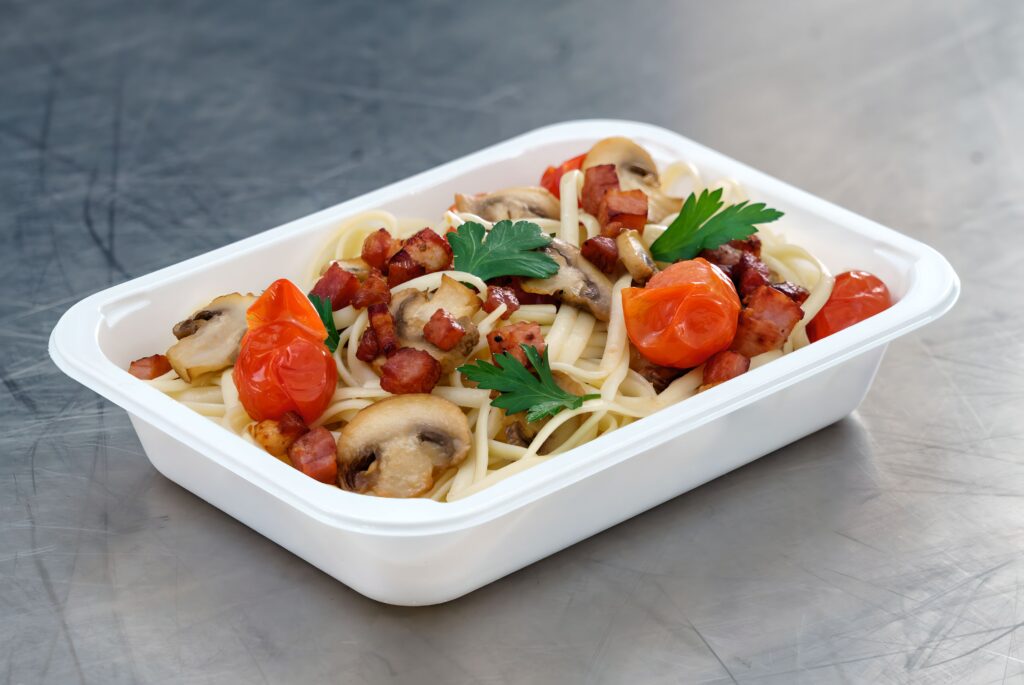
Choose meal prep containers by working through four things: how long food needs to be kept, how you’ll seal it, how it will be reheated, and what portion size you need. For most sealed meals, lined sugarcane trays do all of that, then go in the recycling bin.
It has to work in two places. Your kitchen, and wherever the meal ends up.
In the kitchen, that means trays that seal quickly at volume, stack neatly in the chiller and fit your sealing machine. At the other end, it means a meal that arrives looking the way it left, doesn’t leak on the way and heats up easily.
Ready-meal companies, aged care facilities and hospitals all prep meals this way. The details change from one to the next (a delivery van in one place, a meal trolley in another), but the container’s job stays much the same.
For sealed main meals, they’re a strong alternative. They seal airtight like a plastic tray, look more like a plated meal and are curbside recyclable. For sauces and sides, a plastic tub with a clip-on lid is still the quicker option.
| Lined sugarcane tray | Plastic tub with clip lid | Plastic sealed tray | |
| Closes with | Heat-sealed or skin-sealed film | Clip-on lid | Heat-sealed film |
| Airtight | Yes | No | Yes |
| Looks like | Natural fibre, plated look | Clear or black plastic | Black or clear plastic |
| Reheating | Microwave and oven, within its rating | Microwave (PP), not oven | Depends on the plastic |
| Freezer | Yes | Usually | Usually |
| Disposal | Kerbside recyclable | Depends on the plastic | Depends on the plastic |
| Best for | Main meals, salads and desserts | Snacks, sides, sauces | Main meals |
Using both is a sensible setup. Mains go in sealed sugarcane trays, and sauces, desserts and snacks go in small tubs.
The lining is a thin layer of plastic inside the tray. It keeps grease and moisture out of the fibre, helps extend shelf life and gives the film lid something to seal to.
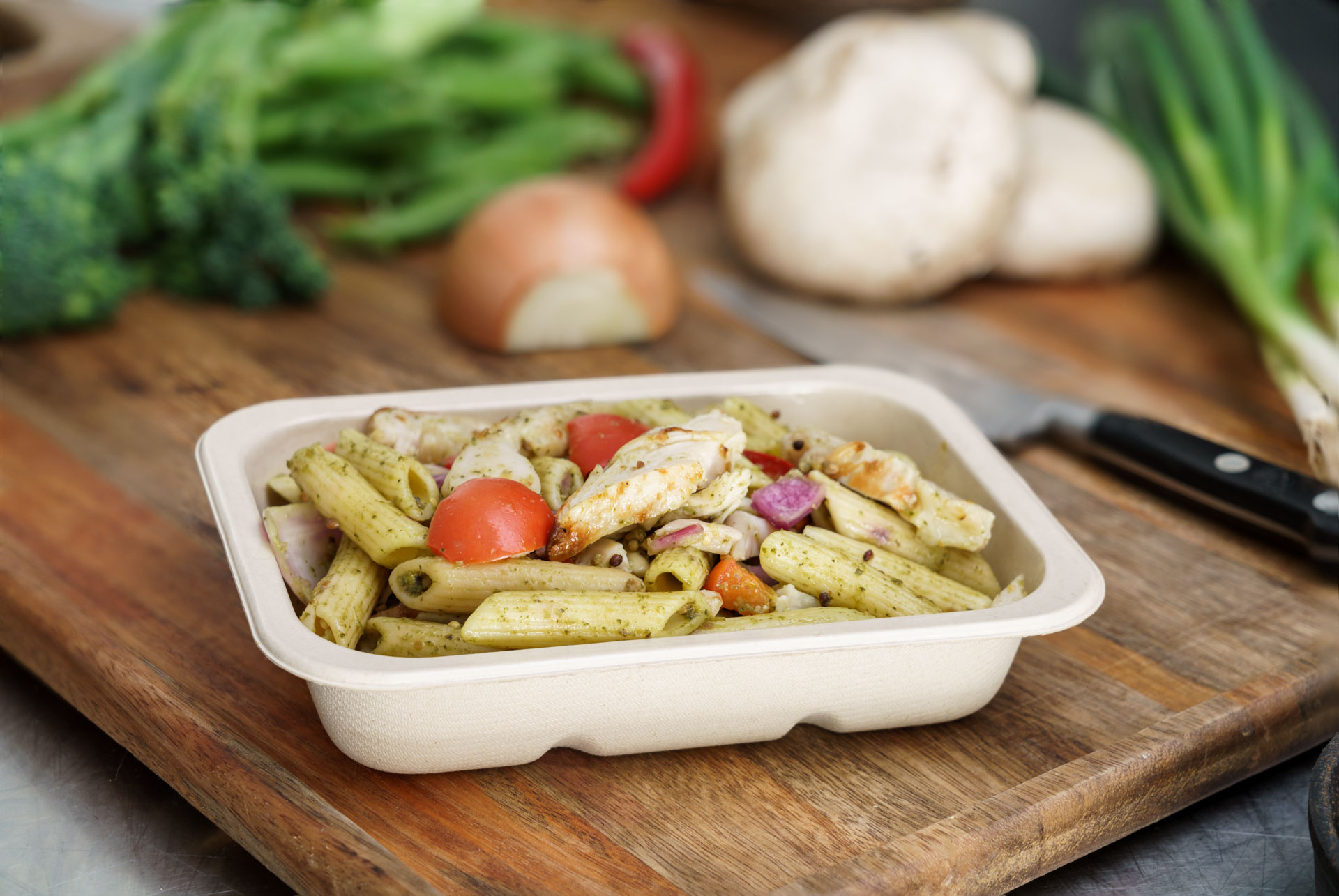
The tray itself is moulded from bagasse, the fibre left after juice is pressed from sugarcane. Fibre on its own soaks up sauce and won’t hold a seal. That’s fine for a takeaway chip tray, but it’s no good for a meal that has to sit in the fridge for a few days.
Pac Food’s trays use an array of different linings, depending on requirement. One example is their PP/EVOH lining, PP is a food-safe plastic that seals well and handles heat. EVOH is a barrier layer that slows oxygen getting into the tray, and less oxygen means food stays fresh for longer, extending the shelf life.
Most kitchens use one of two methods: tray sealing or skin sealing. Lined sugarcane trays work with both.
With tray sealing, the machine heats a flat film onto the tray’s rim, leaving a small pocket of air above the food. It’s quick, it’s the most common setup, and it suits most menus.
Skin sealing goes a step further. The film is drawn down over the food until it’s pressed right against it, with almost no air left inside. Food keeps longer, nothing shifts around in transit, and the meal is easy to see through the film, which is handy if it’s sold from a retail fridge.
Whichever method you use, check the tray fits your sealer’s mould before you order in bulk. Fibre trays can differ slightly from plastic ones in size and rim shape. Finding out on a busy production morning that a new tray won’t sit flat is not fun. Measure the outside length, width and rim against your machine, or run a sample tray through it first.
There’s no fixed number of days. It depends on the recipe, how quickly you chill it, how cold you keep it, and how well you seal it. Your food safety plan sets the use-by for each meal.
The tray can help you get the most out of that number. The EVOH layer slows oxygen from getting in, and skin sealing removes most of the air. But even the best tray won’t rescue a meal that cooled too slowly or sat in a warm van.
Test each meal separately. A beef curry and a chicken salad won’t last the same time, even in identical trays.
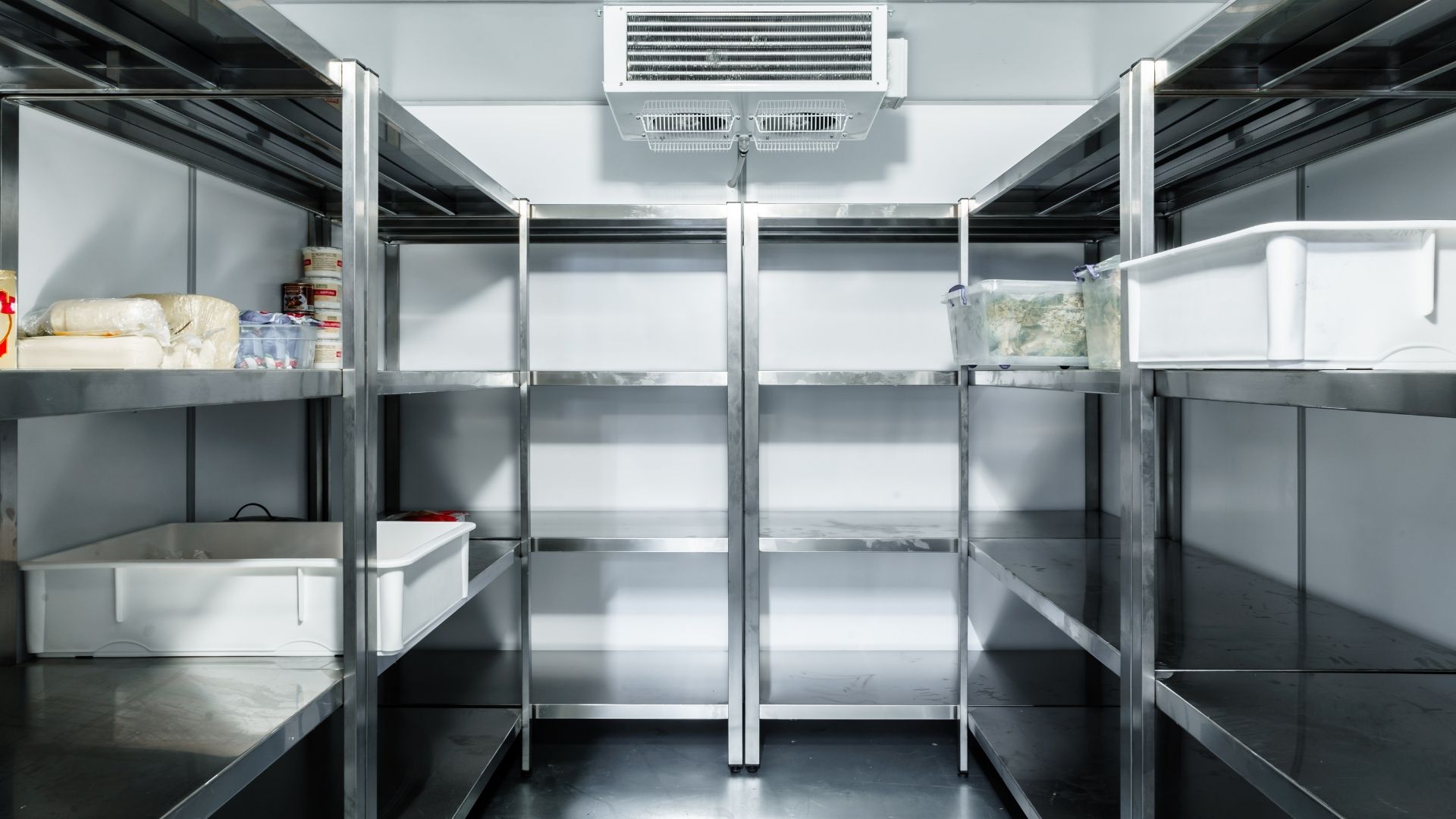
Yes, within their rating. Pac Food’s lined sugarcane trays handle -20°C to 200°C, which covers the freezer, the microwave and a oven reheat.
Peel the film back before heating. For most prepped meals, that range is plenty: straight from the fridge into the microwave, or into a regeneration oven.
Clear heating instructions on the label save whoever’s reheating from guessing, whether that’s a customer at home or a carer on the evening shift.
Start with the portion, then pick the layout. Single trays suit bowls and mains, two sections keep a protein away from a side, and three suit a full plated meal.
| Layout | Best for |
| Single | Curries, pasta, bowls, larger portions |
| 2 sections | Protein and carb, or protein and veg |
| 3 sections | Protein, carb and veg kept separate, such as a plated aged care or hospital meal |
Fill a sample tray with a real portion before you order. If sauce reaches the rim, the film won’t seal cleanly, and that’s where leaks start. It’s also worth checking the tray against your chiller racks, delivery crates and meal trolleys.
Pac Food’s lined sugarcane trays list their capacity, compartments, and dimensions, so you can shortlist sizes quickly.
Yes. Pac Food’s lined sugarcane trays are APCO-approved as kerbside recyclable with the lining left in, and there’s also a fully compostable version.
If you deliver meals to homes, a short line on the label helps, something like “Scrape out any leftovers and pop the tray in your recycling bin.” In aged care and hospitals, check with your waste contractor that the trays can go into your facility’s recycling stream.
And if you mention the trays in your own marketing, stick to what’s been approved. “Kerbside recyclable” and “made from sugarcane fibre” are both fine, but broader green claims are where businesses get into trouble with the ACCC.
Keep the rim clean, seal and check the seal. Then chill, label, and store each tray as your food safety plan says, and write it all down.
Step two is easy to rush on a busy day, but a smear of gravy on the rim can leave a gap in the seal, so it’s worth the extra second.
In Australia, packaging that touches food must meet FSANZ Standard 1.4.3. Keep the food-contact paperwork for your trays and film with your food safety records, so it’s on hand for an audit or inspection.

Work through it in this order, because each answer narrows down the next.
Shelf life comes first because it rules options in or out straight away. There’s no point finding the perfect size if the tray can’t seal.
Send Pac Food your sealer model and portion sizes, and the team can help match trays and film to your machine. Or browse the lined sugarcane trays by size and compartments.
Order before 11 am for same-day dispatch on in-stock items.