
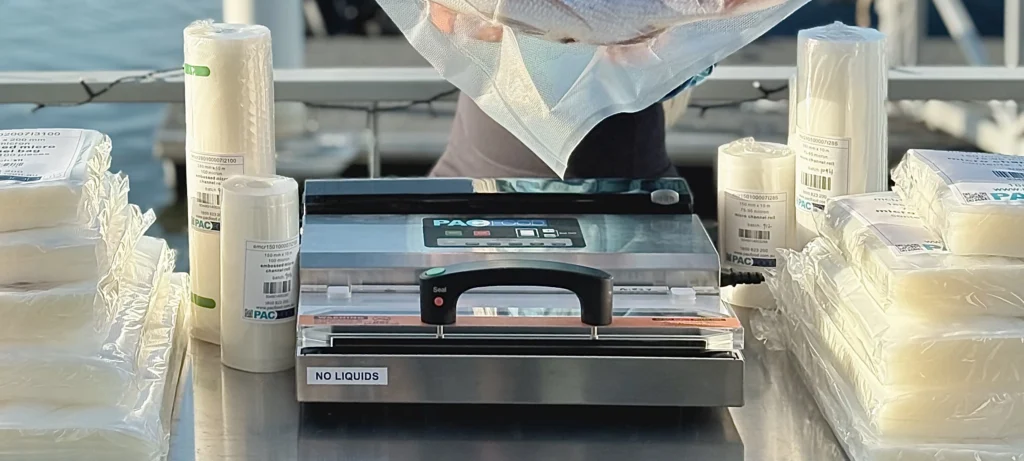
For vacuum sealing before or during camping, hunting and fishing, the bag is just as important as the machine. A 85 µm embossed PA/PE bag suits most trips, whereas a thicker film suits bone-in cuts. Choose based on your sealer type, the food you’re packing, and how long the trip is.
A field-suitable vacuum sealer bag is a multilayer pouch with a tough nylon (PA) outer layer and a polyethylene (PE) inner layer, around 85 µm thick. It should resist punctures, hold its seal in the freezer and work with your sealer.
Each layer serves a different purpose: the nylon outer layer resists punctures and slows air and moisture movement through the film, while the polyethylene inner layer touches the food and forms the heat seal. Some suppliers also publish an oxygen transmission rate (OTR) on the spec sheet; this shows how much oxygen passes through the film in a day, and a lower number means less air gets back in after sealing.
Thickness is important for vacuum-sealed bags because food on a trip gets rougher handling than food in a home fridge. A bone edge, a fish spine or a rough esky lid can puncture a thin bag, and one pinhole lets the air back in. Once that happens, the bag stops protecting the food, which can lead to bacterial growth or spoilage. Check the thickness before you buy, and make sure the bag fits your sealer.
70 – 85 µm suits soft food with no sharp edges. This is a sensible minimum for fillets, chilled meat and camp meals. Around 100 µm is safer for bone-in cuts.
Micron (µm) is the film thickness. This table matches thickness to what you’re packing.
| Thickness | Suits | Camp meals | Bone-in game cuts | Fish fillets |
| 70 µm | Soft food with no sharp edges. | Fine if nothing is sharp | Not advised | Risky with pin bones |
| 70 µm | Fillets, chilled meat, camp meals | Yes | Not advised | Risky with pin bones |
| 100 µm | Bone-in cuts, and product with sharper edges. | Yes | Yes | Yes |
| Around 120 µm | Bone-in cuts | More than you need | Yes | More than you need |
Thicker isn’t always better; it depends on your circumstances, so match the thickness to the sharpest item in the bag. If you’re packing a mix, buy for the hardest cut. One bone-in shoulder portion justifies a thicker bag, while fillets and camp meals are fine at 75-85 µm. Even thick film can be cut by a sharp bone under vacuum, so pad exposed bone ends with a folded paper towel or baking paper before you seal.
It depends on the temperature, not the bag. Vacuum sealing slows spoilage but doesn’t sterilise food. Keep chilled food at 5°C or below, freeze what you won’t eat in the first few days, and keep raw fish frozen.
Safe Food Australia recommends keeping potentially hazardous foods such as meat, fish, and cooked meals at 5°C or below, as vacuum-packed food can still carry harmful bacteria if stored improperly.
| Storage | What to know | On the trip |
| Frozen at -18°C or below | Food stays safe while it’s frozen. Quality drops over time, and air reaching the surface causes freezer burn. | Freeze portions flat before you leave. Frozen packs also help keep the esky cold. |
| Chilled at 5°C or below | This is the Australian storage limit for potentially hazardous food. Some bacteria can still grow in a vacuum bag. | Eat these meals first, and check the esky with a thermometer. |
| Above 5°C | Time between 5°C and 60°C adds up. Safe Food Australia’s 2-hour/4-hour rule guides businesses. | If you’re not sure how long food was warm, throw it out. |
Raw fish needs the most care. Food safety agencies warn that raw fish sealed in a vacuum bag and kept in a fridge can grow Clostridium botulinum, and the toxin can form before the fish looks or smells off. They advise keeping the fish frozen before, during, and after sealing. So freeze fillets before you seal them, keep them frozen until you’re ready to eat, and cut the bag open before you thaw the fish.
Keeping an esky at 5°C or below can be hard in warm weather, so pack a thermometer. If you can’t confirm the temperature, freeze the portions before you leave and eat the chilled ones first.
Food in a vacuum bag is only as safe as its temperature and its seal. If the seal is damaged, or the food has been above 5°C for too long, don’t rely on it.
200×300 mm suits single portions, such as one fish fillet or 200-400 g of meat and 300×400 mm is better suited to two fillets or a bigger cut. For larger or odd-shaped pieces, roll it and cut it to length. Pac Food’s out-of-chamber sealers take bags up to 300 mm wide.
| Bag size | Suits | Example |
| 200×300 mm | Single portions | One fillet, or a meal for one |
| 300×400 mm | Bigger cuts | Two fillets, or a portioned game cut |
| Roll, 280 mm wide | Cut to length | Odd shapes and long fillets |
Pack one bag per meal, since opening a bag lets air in around everything inside; one bag per meal means you only open what you’ll eat. Leave some spare bags above the food so you can cut it open and reseal it if you need to. A roll helps here, because you can cut each bag to the right length. Buy more bags than you think you’ll need, and test seals so you can quickly use up mistakes.
Pac Food stocks pre-cut bags and rolls, so you can choose the format that suits your portioning.
Sometimes, but it’s best to check the bag’s temperature limit first. Pac Food says its 100 µm bags can be used for cooking, but not every vacuum bag is made for boiling water, so check the pack before you heat.
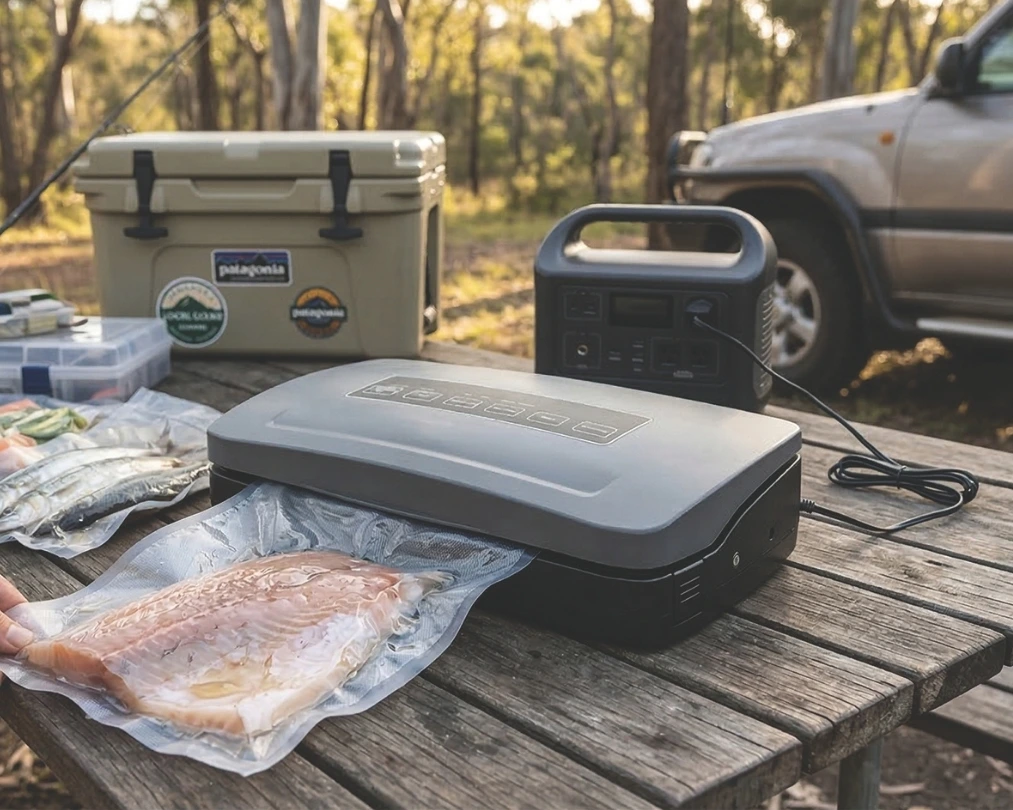
Temperature limits differ between bags; the pack or product listing should state a limit, and the water has to stay below it. If a bag doesn’t state one, don’t heat it. Australian food safety guidance says packaging must be food safe under the conditions it’s used in, and heat is one of those conditions.
This applies to meals you’ve already cooked, such as stews and curries. Keep the bag off the pot’s base, because hot metal can melt the film. Instead, use a trivet or folded cloth, and carefully cut the bag open, as the steam will be hot.
Always confirm your bag’s temperature limit before using it in boiling water.
Frozen food stays safe at -18°C or below, but air reaching its surface still dries it out. A well-sealed bag keeps air off the food’s surface, and that air causes freezer burn. Multilayer nylon and polyethylene film also slows moisture loss. Freezer burn doesn’t make food unsafe, according to the USDA’s Food Safety and Inspection Service, but it leaves dry patches on the surface.
That matters on a trip, where you’ve packed fresh-caught fish or a good cut of venison and want it to last. Freeze portions flat before you leave, and don’t overfill the bag. If a bag loses its seal in the freezer, the food is still safe if it stayed frozen, but the quality drops; trim off any dry patches before you cook.
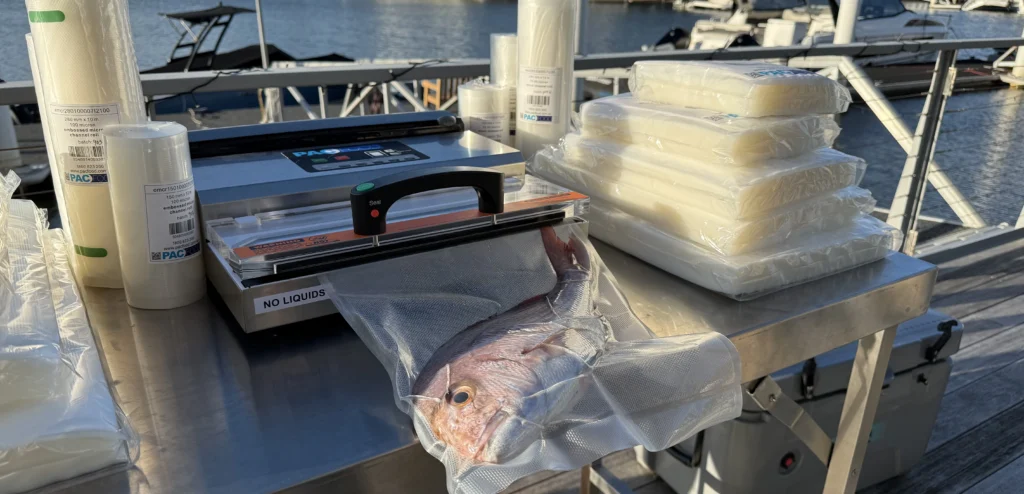
External (clamp) sealers need embossed or channel bags so the air has a path out. Smooth bags are made for in-chamber sealers and won’t evacuate properly on an external sealer. Pac Food’s VS12 Portable Vacuum Sealer, and VS603 are out-of-chamber sealers that work only with channel bags.
Check your bag type before you leave, and run a test seal at home. If you fish a lot, Pac Food suggests the VS603 for keen fishermen, as it has a stainless steel body and is built for medium to heavy-duty use.
Yes. Orders placed before 11am are dispatched the same day. Dispatch isn’t delivery, so how long your bags take to arrive depends on where you live. It’s best to order a few days before you leave, as that gives you time to run a test seal at home and check the bags fit your sealer.
Same-day dispatch depends on the order cut-off and stock. Check the current terms on the Pac Food website before you order.